Samton Launches Route Architect PoC as Part of SK Innovation's AI Impact Solution
Route Architect uses AI trained on operating data to design dispatch and routes for minimum energy use, then verifies the reductions through Samton-DMRV.
Samton is participating in AI Impact Solution, hosted by SK Innovation, with its Route Architect project and began the kickoff boot camp on July 14, 2026.
AI Impact Solution selects teams that use AI to address energy and social challenges and supports them with PoC development, expert mentoring and commercialization. Samton will conduct its demonstration under Track A: AI for Energy, which focuses on energy efficiency and carbon reduction.
SK Innovation AI Impact Solutionskimpactai.com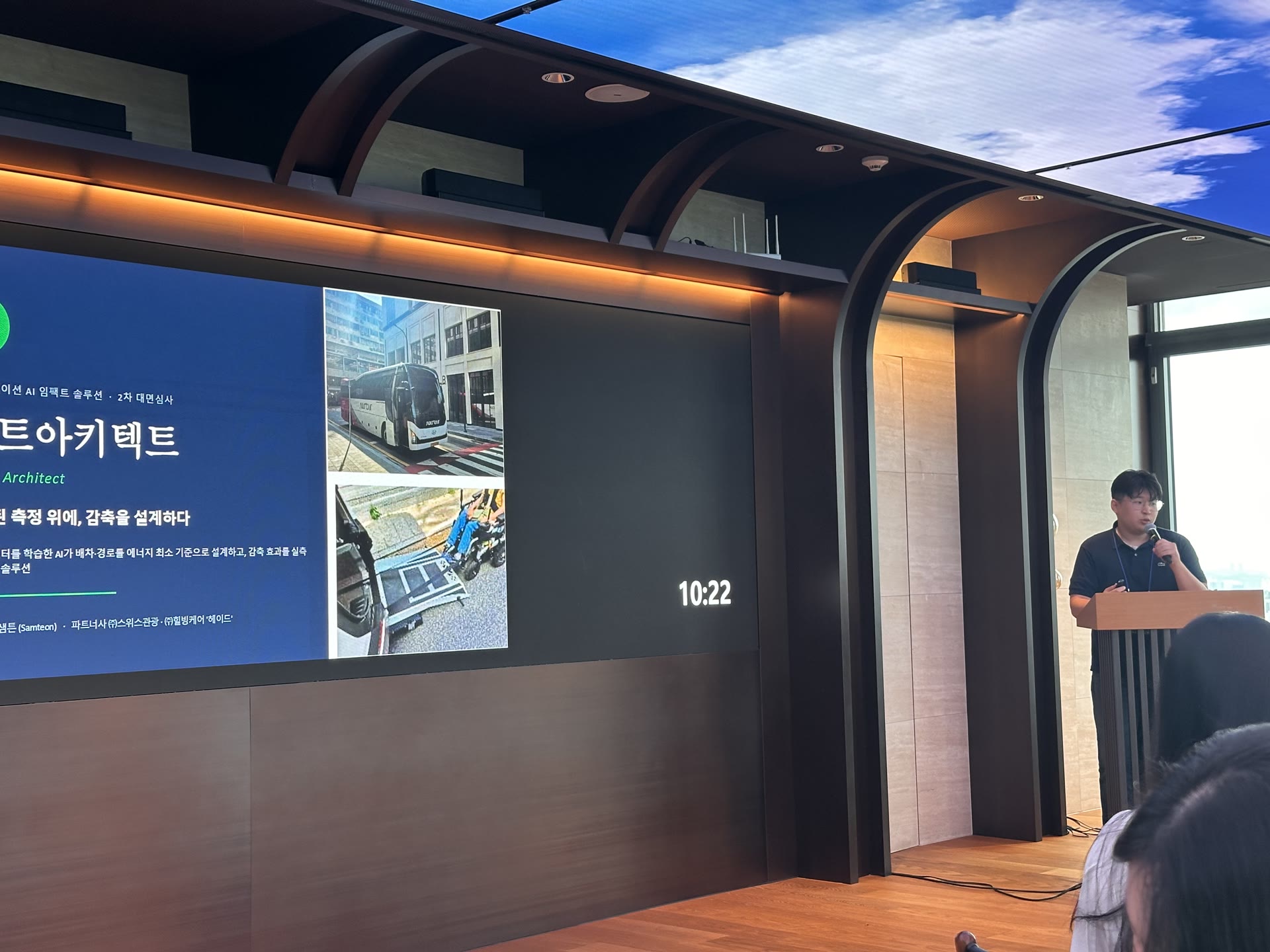
Presenting Route Architect's problem definition and solution at SK Innovation AI Impact Solution
Not simply the fastest route, but the one that uses the least energy
Operators of commuter buses, charter buses and mobility services for passengers with limited mobility must assign multiple vehicles while accounting for bookings and schedules. Many still rely on drivers' individual navigation apps and manual dispatching, which can lead to several vehicles repeating similar routes or traveling empty.
Route Architect goes beyond finding the shortest route. Its AI learns from actual DTG driving records and booking and demand data to design dispatch plans and routes that minimize fuel and energy use.
Four AI capabilities are connected in the process:
- forecasting passenger demand and booking patterns by route and time;
- optimizing dispatch across vehicles, routes and schedules;
- predicting energy consumption by road segment and driving behavior; and
- comparing carbon and cost across multiple dispatch and route scenarios.
The goal is to apply the same optimization structure not only to regularly scheduled commuter buses but also to mobility-assistance vehicles, which must account for constraints such as booking times and wheelchair capacity.
Measure, reduce and verify again
Route Architect does not end with an AI-recommended route. It establishes a baseline from pre-operation data, applies optimized dispatch and routes to real vehicles, and then uses Samton-DMRV to determine how fuel consumption and carbon emissions changed after operation.
By linking measurement, optimization and verification in one flow, reductions are demonstrated with data rather than asserted.
Verification results are fed back into the AI model as training data. As field data accumulates, predictions and optimization can become better tailored to each vehicle and route. For companies, the resulting dataset can support not only real fuel-cost reductions but also management of Scope 3 emissions from transportation.
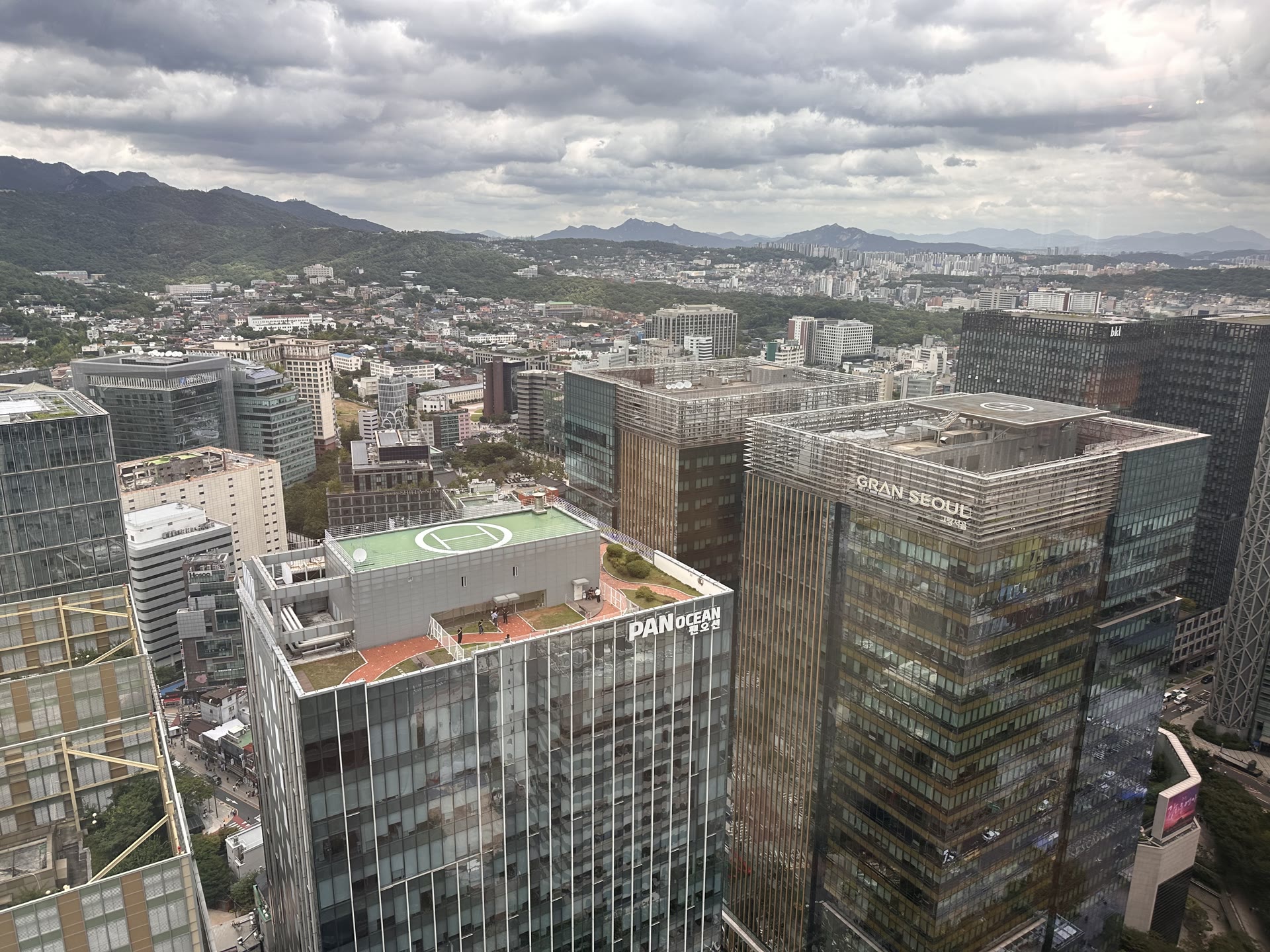
The AI Impact Solution kickoff boot camp, where the Route Architect PoC implementation plan was developed
Verification across commuter buses and mobility-assistance services
The PoC is planned across two different operating environments. Samton expects to secure actual operating data and verify AI-based dispatch and route optimization on three to five commuter-bus routes operated by partner Swiss Tour and two to three vehicles from HAID, Healbeing Care's mobility service for passengers with limited mobility.
In July, the team will select target routes and define baselines. In August, it will train the AI model and develop an engine prototype. From September, the system will be applied to real vehicles, followed by verification of reductions and model refinement through Samton-DMRV in October. Fuel use, empty mileage, dispatch waiting time and carbon reductions are the principal metrics for the demonstration.
The figures currently presented are targets to be tested through the PoC, not achieved results. Samton will compare conditions before and after optimization using data collected from real vehicles and identify the specific conditions under which reductions occur.
Connecting energy reductions with improved mobility access
More efficient routes can reduce operating costs as well as fuel use and carbon emissions. For commuter-bus operators, this can support sustainable fleet operations and carbon-data management for corporate clients. For mobility-assistance services, it can lead to faster dispatch and more reliable operations.
Vehicles serving passengers with limited mobility must consider more than shortest distance, including booking times, boarding assistance and wheelchair capacity. Route Architect is designed so its AI accounts for these real-world constraints, improving both energy efficiency and mobility convenience.
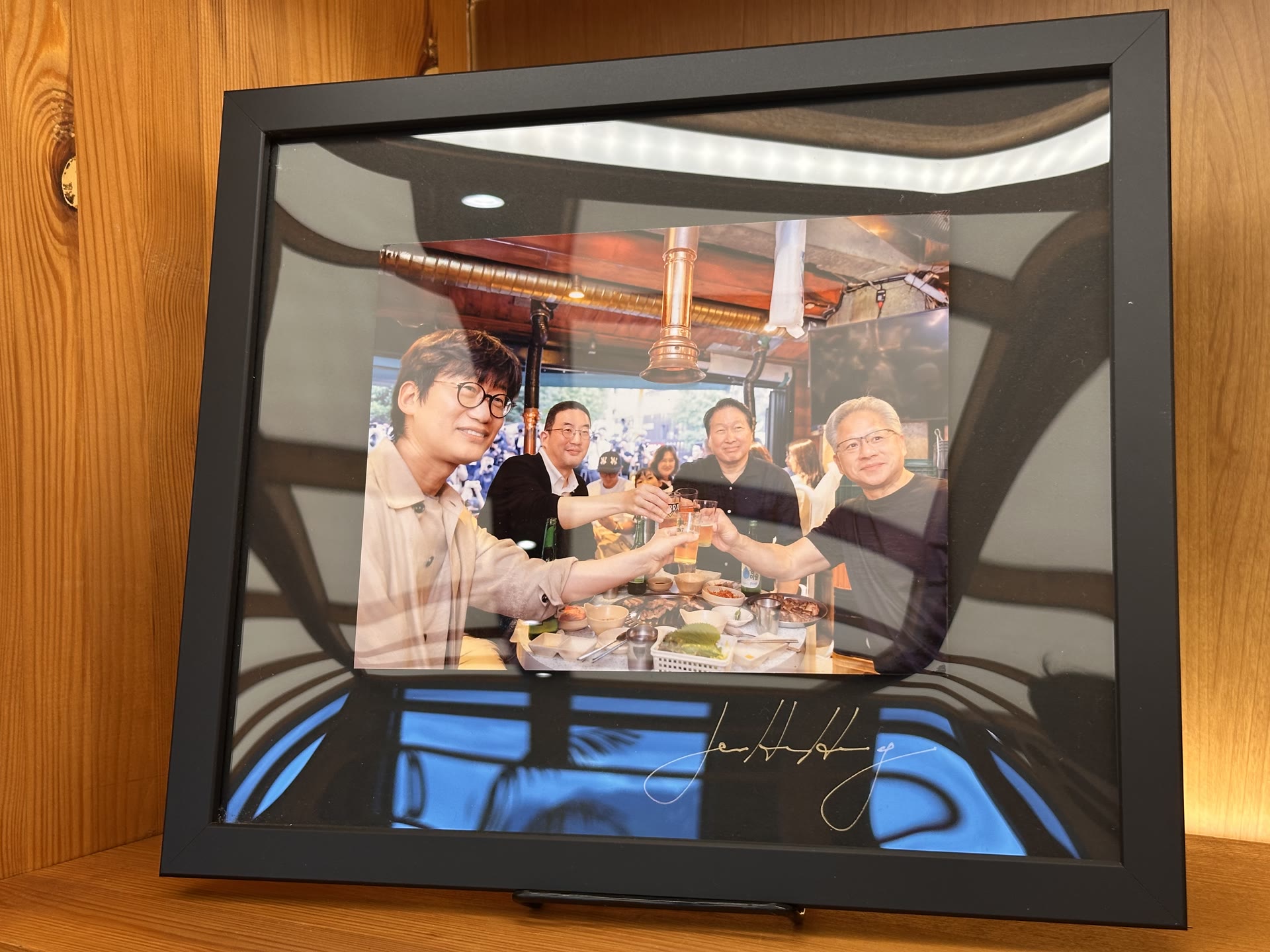
A commemorative photograph from the widely discussed “Kkanbu Chicken meeting,” displayed at the kickoff venue
Proving AI's impact with field data
The kickoff venue displayed a photograph from the “Kkanbu Chicken meeting,” widely recognized as a symbolic moment of collaboration in the AI industry. It resonated with the program's direction: new possibilities emerge when different industries and technologies meet.
Route Architect follows the same principle of not isolating technologies. AI designs reduction strategies from actual operating data, while Samton-DMRV verifies whether those changes occurred in the field. Transport operators and mobility-service providers can then use the verified data for further operational improvement and carbon management.
Through the mentoring and PoC process of AI Impact Solution, Samton will refine Route Architect's model and field-application method and present energy and carbon reductions verified in real operations.